Reviewed against published clinical literature
hort answer: yes, and mostly in a good direction. GLP-1 medications like semaglutide (Ozempic, Wegovy) and tirzepatide (Mounjaro, Zepbound) have been shown to reduce liver fat significantly, and newer research suggests they can even improve liver scarring in advanced disease. But the same rapid weight loss that helps your liver also comes with nutrition trade-offs that affect your whole body. Here’s the full picture.
Key takeaways
- GLP-1 medications can reduce liver fat by around a third in people with fatty liver, largely independent of overall weight loss.
- In July 2026, a major trial showed semaglutide may improve liver scarring in advanced MASH, including early cirrhosis, a first for this drug class.
- The catch isn’t the liver, it’s nutrition. Rapid appetite suppression can lead to low protein intake, muscle loss, and micronutrient gaps.
- Roughly one in five to one in four of the weight lost on these drugs can be lean muscle mass, not fat.
- Iron, calcium, vitamin D, B12, and thiamine deficiencies have all been documented in GLP-1 users.
- The liver benefits are real. Protecting the rest of your body during the process is where most people are left without guidance.
Why GLP-1s and the liver are suddenly the same conversation
For years, liver health lived in one corner of medicine and weight-loss drugs lived in another. GLP-1 medications collapsed that wall.
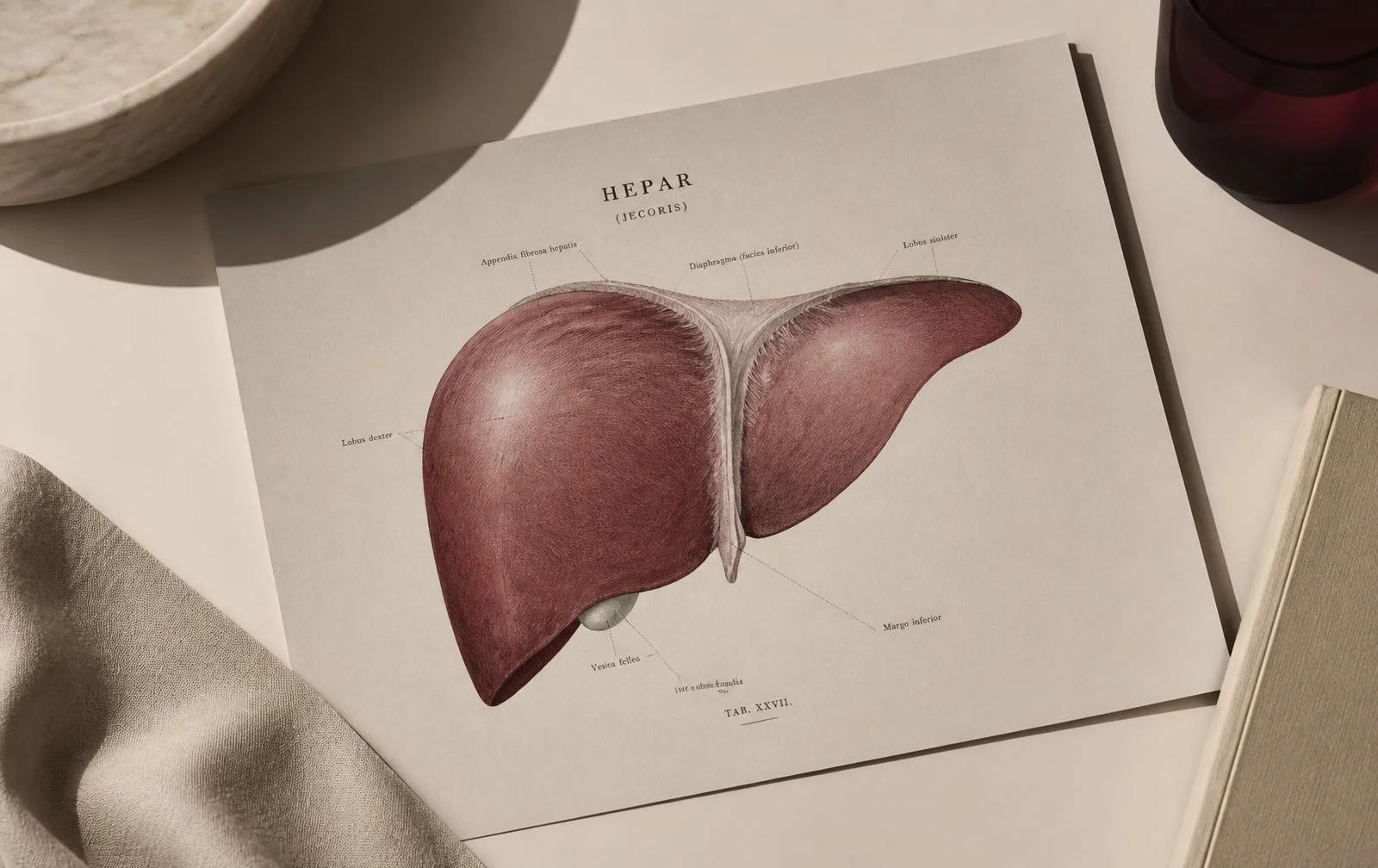
The reason is simple: the most common liver condition today, metabolic dysfunction-associated steatotic liver disease (MASLD, formerly called fatty liver disease), is a metabolic problem. It’s driven by the same things GLP-1s target: excess weight, insulin resistance, and how the body stores fat. MASLD affects roughly a third of adults globally, so when a drug reshapes metabolism, the liver is one of the first organs to feel it.
That’s worth sitting with for a second, because it’s the whole point: your liver is the engine of your metabolism. Anything that changes how your body handles fat and sugar changes what your liver has to deal with.
What the research actually shows
The evidence here is genuinely strong, which is not something you can say about most liver topics.
Liver fat drops substantially. In studies of people with fatty liver, semaglutide reduced liver fat content by around 30%, roughly a third. Notably, in one crossover study of obese non-diabetic men, the drop in liver fat was tied more to reductions in visceral fat than to overall weight loss, meaning the liver benefit isn’t only a side effect of the number on the scale2.
Liver enzymes improve. Trials have reported reductions of roughly 18 to 34% in ALT and around 28% in AST, the blood markers that signal liver stress, with the improvements tracking alongside reductions in liver fat2.
And the newest finding is the biggest. In July 2026, researchers at UC San Diego published results in The Lancet Gastroenterology & Hepatology showing that semaglutide may improve liver fibrosis, the scarring, in patients with advanced MASH, including those with early-stage cirrhosis. It was the first trial to show this drug improving scarring at that stage of disease1.
A 2026 systematic review pulled it together: GLP-1 agonists improved liver fibrosis, steatohepatitis, liver enzymes, weight, and blood sugar in people with MASLD or MASH. The one honest caveat the same review flagged: in people without type 2 diabetes, the fibrosis benefit was less clear, and there’s less data. So this is promising, not a settled cure.
The part nobody prepares you for: the nutrition trade-off
Here’s what gets lost in the headlines. GLP-1s work by suppressing appetite, and that has consequences beyond the liver.
When you eat dramatically less, you don’t just lose fat. Body-composition studies from tirzepatide trials found that roughly a quarter of the total weight lost was lean mass, meaning muscle, not fat. That matters, because muscle drives your resting metabolism, your strength, and how well you keep the weight off later3.
Then there’s what you’re not getting enough of. A 2026 review found GLP-1 users frequently fell short on protein, and documented lower iron, calcium, vitamin D, B12, and thiamine. In one analysis, more than 60% of users consumed below the estimated requirement for calcium and iron, and average vitamin D intake was around 20% of recommendations4.
Iron and B12 matter here for a specific reason: your liver stores both. It’s the body’s main reserve for iron, B12, and several other nutrients. So the same organ benefiting from fat loss is also drawing down its own reserves when overall intake drops. None of this means GLP-1s are bad for your liver. It means the liver is doing a lot of quiet adjusting during rapid weight loss, and most people are never told to think about it.
What GLP-1s can’t do for your liver
Worth being clear-eyed, because this is where marketing tends to overreach.
A GLP-1 is not a liver drug. It’s a metabolic drug with liver benefits. It won’t undo heavy drinking, it isn’t a substitute for the basics, and the liver improvements largely follow from weight and fat loss, so they depend on the weight loss actually happening and being sustained. And whatever your liver did before you started, it never needed a cleanse to do its job, and it doesn’t need one now.
The nutrition side, the protein, the micronutrients, the muscle, isn’t handled by the medication at all. That’s on you and whoever’s guiding your care.
How hard is your liver working?
5 quick questions, no email needed. See how much your liver quietly handles for you.
In a typical week, how many alcoholic drinks do you have?
Where this leaves you (and where Olsom fits)
If there’s one theme across all of this, it’s that GLP-1s are powerful at the metabolic level but silent on the supporting details. The drug drops your liver fat. It doesn’t watch your protein, your micronutrients, or the organ quietly rebalancing in the background.
That gap, the everyday, foundational support that a powerful drug doesn’t cover, is exactly the space Olsom was built for.
We’re a metabolic health company, and we start with the liver, because the liver is where so much of metabolism is actually run. Olsom is a focused daily formula built around ingredients studied for their role in normal liver function, at the doses the research used, not a thirty-ingredient label built to look impressive. It’s not a GLP-1, it’s not a treatment, and it’s not a replacement for anything your doctor has you on. It’s daily groundwork for the organ doing the heavy lifting.
If you’re on a GLP-1, the most useful things you can do are simple and mostly not about supplements at all: prioritize protein, keep moving to protect muscle, and talk to your clinician about monitoring your bloodwork. And if you want to give the organ at the center of all this some steady daily attention, that’s where we come in.
Olsom launches soon. The full formula goes to our list first, along with a free 5-minute guide to liver health.
Frequently asked questions
Do GLP-1 medications improve fatty liver?
Research shows GLP-1s like semaglutide can reduce liver fat by around a third and improve liver enzymes in people with fatty liver disease. A 2026 trial also suggested semaglutide may improve liver scarring in advanced disease. Benefits are strongest in people with type 2 diabetes and less established in those without.
Can a GLP-1 damage your liver?
The direct liver effects seen in studies are positive. The indirect risk is nutritional: rapid appetite suppression can lead to inadequate protein and micronutrients, including iron and B12, which the liver stores. This is about the nutrition trade-off of fast weight loss, not the drug harming the liver directly.
Should I take a liver supplement while on a GLP-1?
No supplement is a substitute for medical guidance, and you should talk to your clinician, especially since you may already be monitoring bloodwork. A supplement is at most a small daily part of a routine, not a treatment. The higher-impact moves on a GLP-1 are adequate protein, resistance exercise, and micronutrient monitoring.
Does losing weight on a GLP-1 help the liver even without a supplement?
Yes. The liver benefits in the research come from the weight and fat loss itself, particularly loss of visceral fat, not from any supplement. That's the main event.
Is Olsom a GLP-1 or a treatment for fatty liver?
No. Olsom is a daily liver-support supplement, not a medication and not a treatment for any condition. It doesn't diagnose, treat, cure, or prevent disease.
Sources
- UC San Diego Health, “GLP-1 Shows Promise for Patients with Advanced Fatty Liver Disease”, July 2026: health.ucsd.edu
- “The Effect of GLP-1 Agonists on Patients with MASLD: A Systematic Review and Meta-Analysis”, 2026: ncbi.nlm.nih.gov
- “Hidden Malnutrition in the GLP-1 Era: Micronutrient Status, Protein Adequacy, and Lean Mass”, Nutrients, August 2026: ncbi.nlm.nih.gov
- “Micronutrient and Nutritional Deficiencies Associated With GLP-1 Receptor Agonist Therapy”, 2026: pubmed.ncbi.nlm.nih.gov
Written by
The Olsom Team
Editorial, Olsom
We research and write everything published here, working only from primary clinical literature and guidance from major medical institutions. We name the limits of the evidence, including where it runs against our own product.
This article is for general education and is not medical advice. It is not intended to diagnose, treat, cure, or prevent any disease. Do not start, stop, or change any medication or supplement without speaking to a qualified healthcare professional.